


Organizing your kid’s wardrobe can turn chaos into calm—making morning routines easier for everyone.
Start with a fun approach to sort clothes by size, season, and occasion.
This way, everything they need is easily accessible and reduces the overwhelm of getting dressed.
Table of Contents
Creating a DIY Clothing Rack
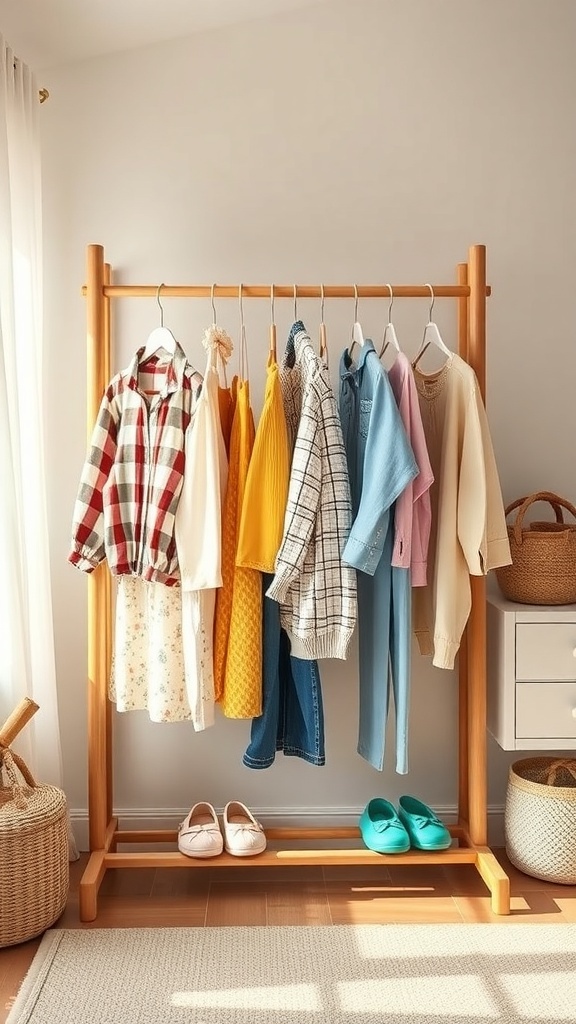
Setting up a DIY clothing rack can be a fun and practical project for organizing your kids’ wardrobe. The image shows a simple yet stylish wooden rack displaying a variety of colorful clothes. This setup not only keeps things tidy but also makes it easy for kids to see and choose their outfits.
To create your own clothing rack, you can use materials like wooden dowels and brackets. Start by measuring the space you have available. Cut the dowels to your desired height and width, then assemble them using the brackets. Make sure it’s sturdy enough to hold the clothes without tipping over.
Once your rack is ready, hang up your kids’ favorite outfits. You can mix and match colors and styles, just like in the image. This not only helps in keeping things organized but also adds a splash of color to the room. Plus, it encourages kids to take part in choosing their clothes, making getting dressed a bit more exciting!
Labeling Storage Bins for Easy Access
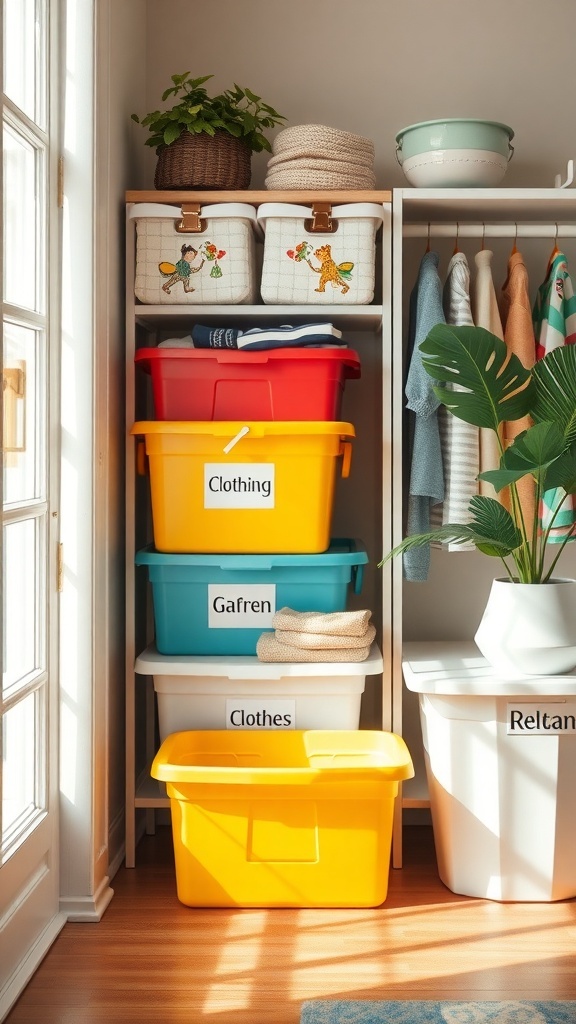
Keeping kids’ wardrobes organized can feel like a challenge, but labeling storage bins makes it much easier. In the image, you can see a neat setup with colorful bins that are clearly labeled. This simple step helps kids know where to find their clothes and toys without any fuss.
The bright yellow and blue bins stand out, making it easy for little ones to spot what they need. Each label is clear and straightforward, which is perfect for young children who are just learning to read. This way, they can take charge of their own space and help keep it tidy.
Using different colors for different categories can also add a fun element to organization. For example, you might have a yellow bin for clothes and a blue one for toys. This not only looks appealing but also makes it easier for kids to remember where things go. A little creativity in labeling can go a long way in making organization a breeze!
Organizing Shoes by Style and Size
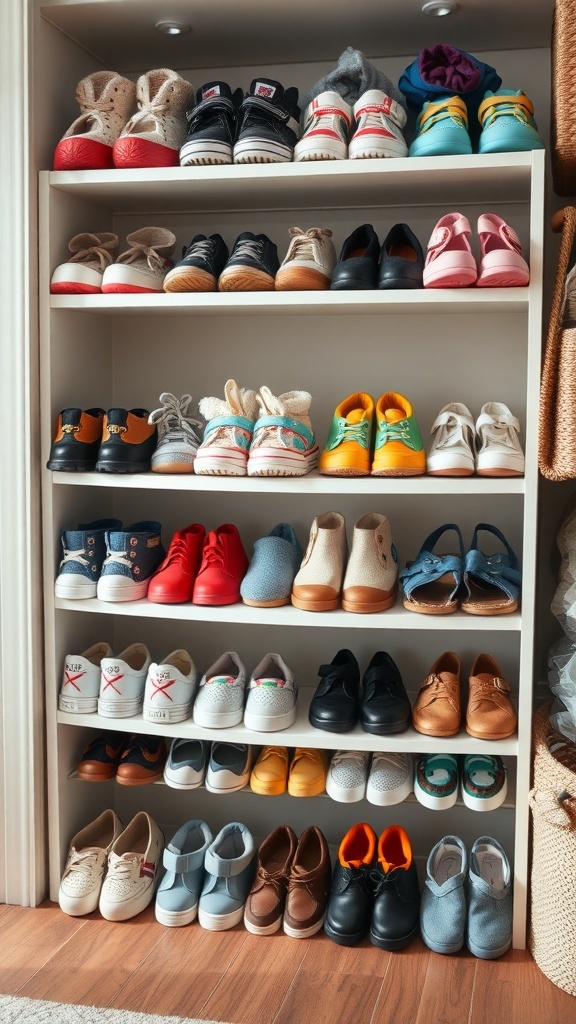
Keeping kids’ shoes organized can make a big difference in daily routines. The image shows a well-arranged shoe shelf, showcasing a variety of styles and sizes. Each pair is neatly placed, making it easy for kids to find what they need.
Start by sorting shoes into categories. Group sneakers, sandals, and dress shoes together. This way, kids can quickly grab the right pair for any occasion. Use labels or color coding to make it even simpler.
Next, consider size. Place smaller shoes on lower shelves where kids can reach them. Reserve higher shelves for larger sizes. This not only keeps things tidy but also helps kids learn to put their shoes away.
Don’t forget to involve your kids in the process! Let them choose where to place their favorite pairs. This can make them more excited about keeping their space organized.
Incorporating Fun and Functional Hangers
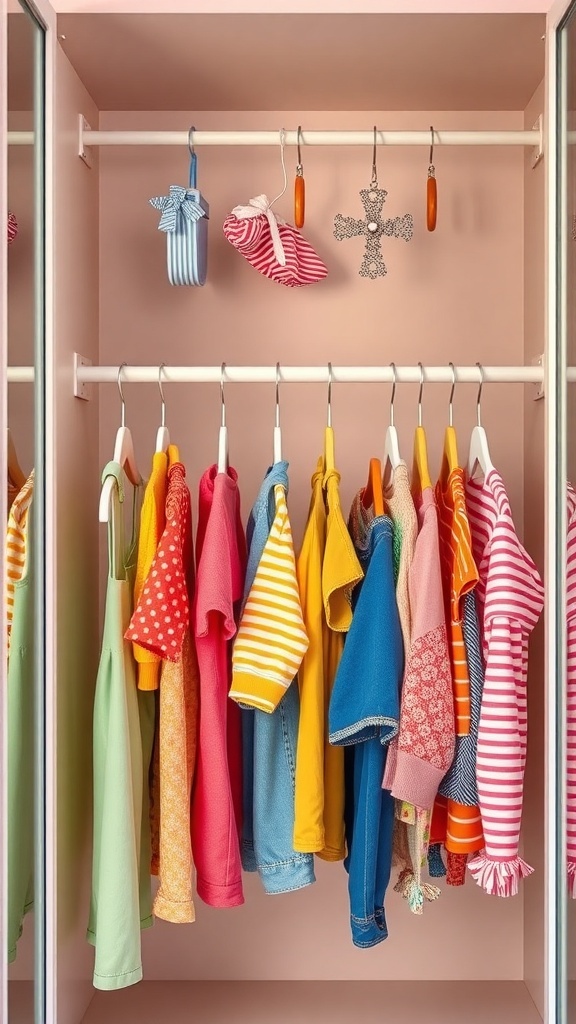
When organizing a kid’s wardrobe, choosing the right hangers can make a big difference. The image shows a colorful array of shirts hanging neatly in a closet, each on a fun and functional hanger. These hangers not only keep clothes organized but also add a playful touch to the space.
Brightly colored hangers can make getting dressed more enjoyable for kids. They can easily spot their favorite shirts and choose outfits with excitement. The variety of colors in the image reflects a cheerful atmosphere, encouraging kids to take part in their own wardrobe organization.
Using hangers that are the right size for children’s clothing is essential. Smaller hangers prevent clothes from slipping off and getting wrinkled. Plus, they help maximize space in the closet, making it easier to see all the options available.
Incorporating fun elements, like patterned or uniquely shaped hangers, can also spark creativity. Kids might be more inclined to keep their space tidy if they feel a sense of ownership over their wardrobe. Overall, choosing the right hangers is a simple yet effective way to make kids’ wardrobe organization both fun and functional.
Creating a Capsule Wardrobe for Kids
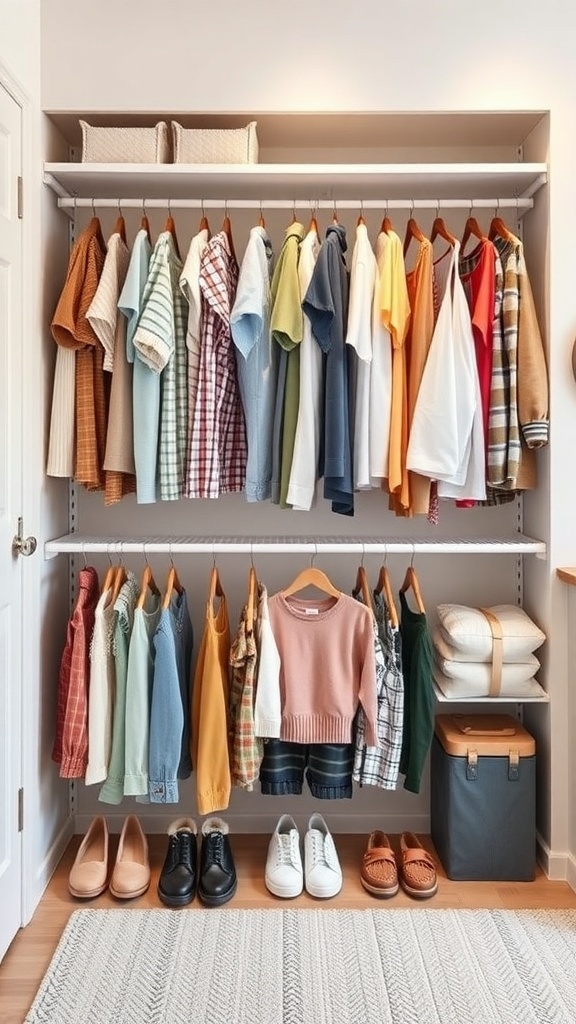
Creating a capsule wardrobe for kids can be a fun and practical way to simplify their clothing choices. The image shows a neatly organized closet filled with a variety of colorful shirts, sweaters, and shoes. This setup makes it easy for kids to pick outfits without feeling overwhelmed.
Start by selecting a few key pieces that mix and match well. Look for tops and bottoms in complementary colors. The image highlights a range of styles, from casual tees to cozy sweaters, which can be paired together effortlessly.
Don’t forget about shoes! A couple of versatile pairs, like sneakers and dress shoes, can cover most occasions. The closet in the image has a nice selection of footwear, making it easy to choose the right pair for any outfit.
Storage solutions are also important. The bins and boxes in the image help keep everything tidy. Use them for seasonal items or extra accessories. This way, the wardrobe stays organized and clutter-free, making mornings smoother for both kids and parents.
Utilizing Vertical Space with Shelving
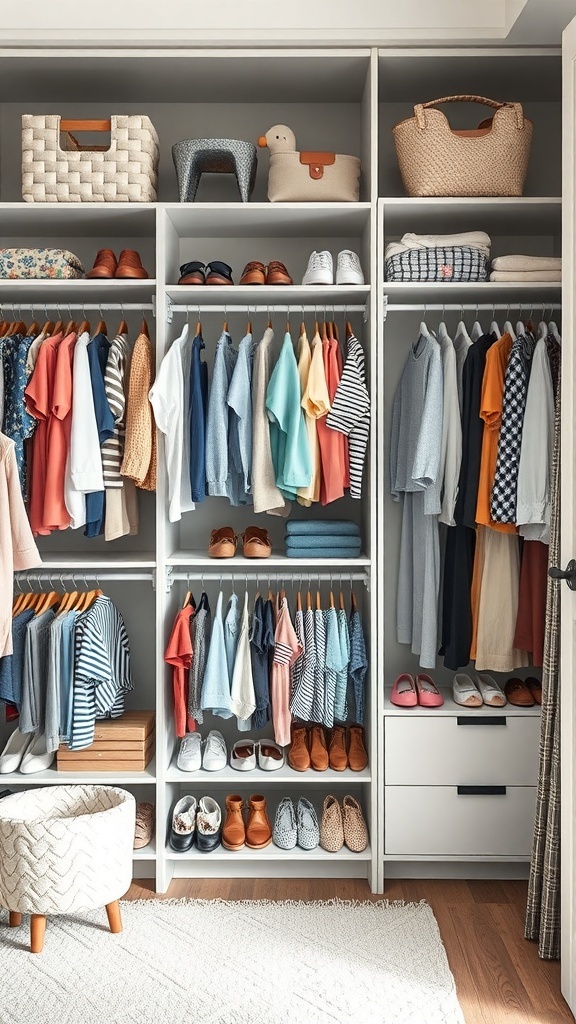
When organizing a kid’s wardrobe, using vertical space is key. The image shows a well-structured closet that maximizes every inch. Shelves are stacked high, allowing for plenty of storage without taking up too much floor space.
Notice how the upper shelves hold baskets and folded clothes, keeping items tidy and out of reach. This is perfect for storing seasonal clothes or extra blankets. The lower shelves are accessible, showcasing shoes and everyday wear, making it easy for kids to grab what they need.
Hanging clothes are neatly organized by type and color, which not only looks appealing but also helps kids learn to pick out their outfits. This setup encourages independence, as they can see their options clearly.
Incorporating drawers at the bottom adds another layer of organization. They can hold smaller items like socks and accessories, keeping everything in one place. This design is not just functional; it creates a calm and inviting space for kids to enjoy.
Seasonal Clothing Rotation Strategies
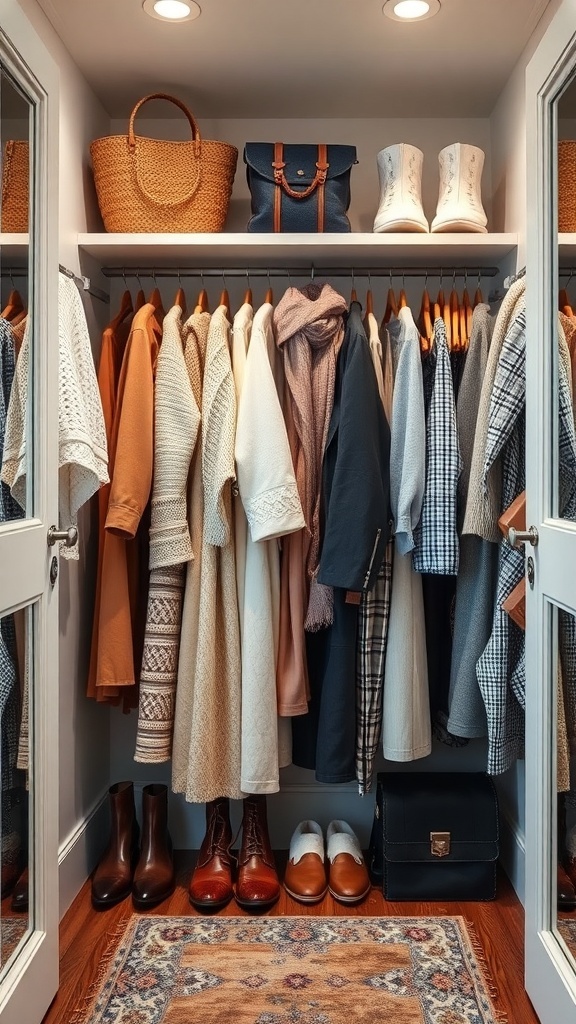
Organizing a kid’s wardrobe can feel like a big task, especially when seasons change. The image shows a neatly arranged closet filled with various clothing items, from cozy sweaters to stylish boots. This setup highlights the importance of seasonal clothing rotation.
Start by sorting clothes into categories: keep, donate, or store. Keep the items your child currently wears and donate those that no longer fit. For clothes that are out of season, like summer shorts or winter coats, store them in bins or vacuum-sealed bags. This keeps the closet tidy and makes it easier to find what you need.
Labeling bins can be a fun activity with your kids. They can help choose colors or stickers for each season. This not only makes it easier to find clothes but also teaches them about organization. When the seasons change, simply swap out the bins, and you’re good to go!
Another tip is to involve your child in the process. Let them pick their favorite outfits for the upcoming season. This helps them feel more connected to their wardrobe and makes getting dressed easier.
Implementing a Clothing Swap System
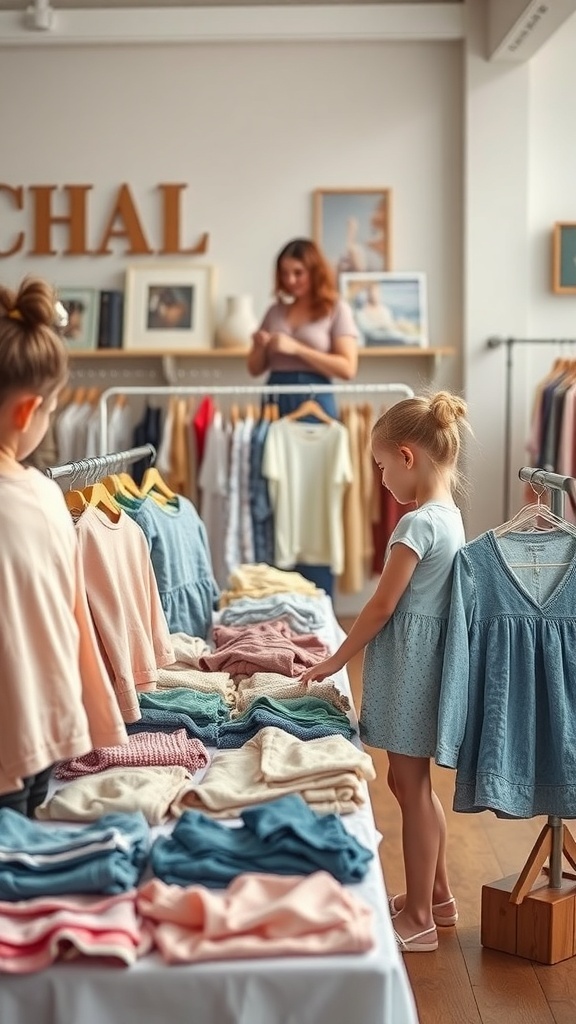
Creating a clothing swap system can be a fun and practical way to refresh your kids’ wardrobes. The image shows a vibrant space filled with neatly organized clothes, perfect for such an event. Kids can explore different styles while parents can connect and share tips.
Start by gathering a group of friends or neighbors. Each family can bring gently used clothes that their kids have outgrown. Set a date and location, like a community center or even your living room. Make sure to have tables set up for easy browsing.
During the swap, kids can pick out items they like while parents can chat and enjoy some snacks. This not only helps in decluttering but also promotes sustainability. Plus, it’s a great way to introduce kids to the idea of sharing and recycling clothes.
After the event, any leftover clothes can be donated to local charities. This way, everyone benefits, and you can feel good knowing that the clothes will find new homes.
Creating a Laundry Routine for Kids’ Clothes
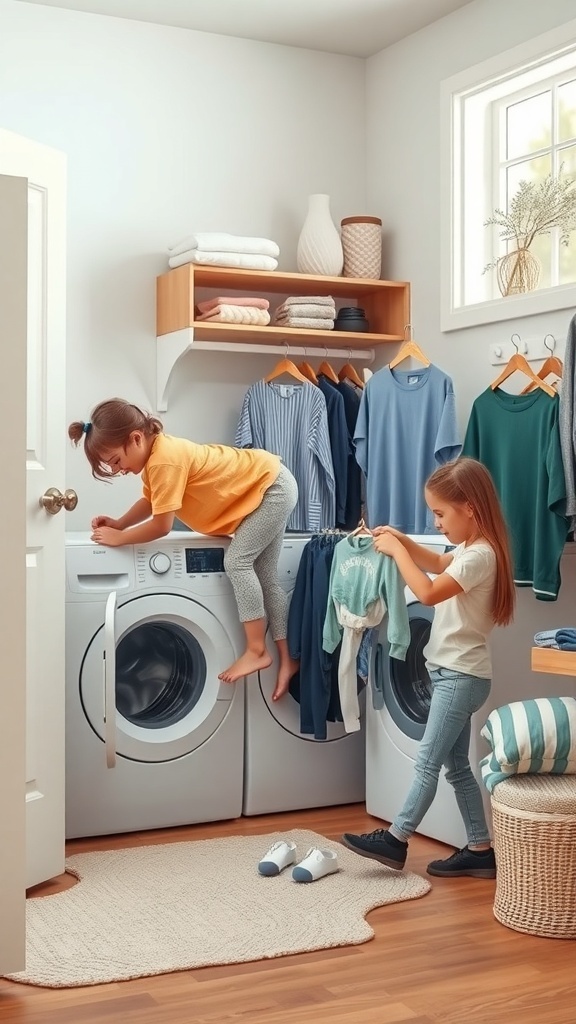
Having a laundry routine can make life easier for both kids and parents. In the image, two children are actively involved in doing laundry, which shows how fun and engaging this task can be.
The child on the left is climbing on the washing machine, while the other is sorting clothes. This highlights the importance of making laundry a family activity. When kids help with laundry, they learn responsibility and teamwork.
To start a laundry routine, set specific days for washing clothes. This helps kids know what to expect. You can even create a chart to track their contributions. Make it a game by timing how fast they can sort clothes or fold them.
Incorporating fun elements, like choosing their favorite laundry detergent scent, can also make the process enjoyable. Remember, the goal is to teach kids valuable skills while keeping it light and fun!
Storing Out-of-Season Clothes Effectively
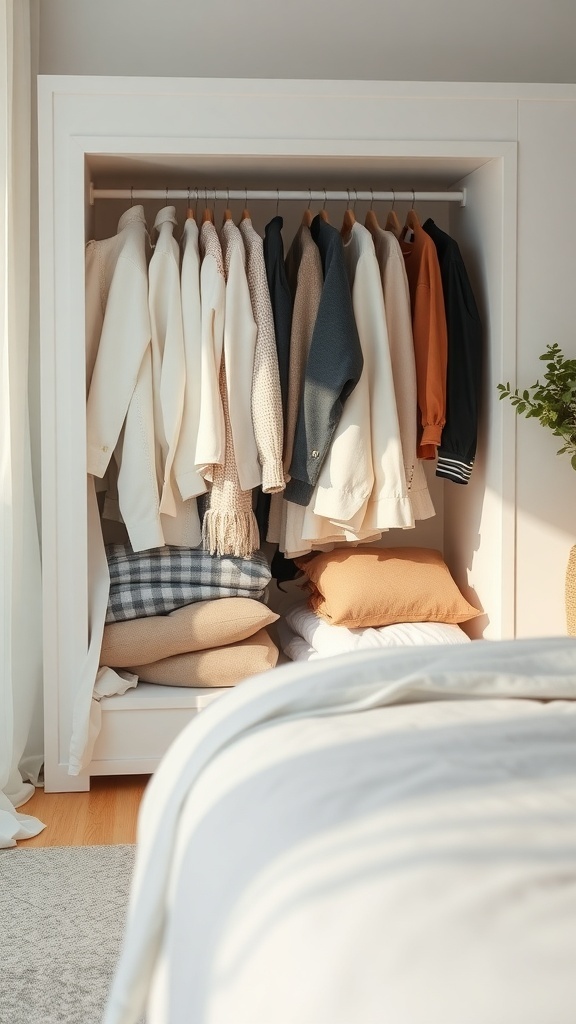
When it comes to kids’ wardrobes, managing out-of-season clothes can be a breeze with the right approach. The image shows a neatly organized wardrobe, showcasing a variety of sweaters and jackets hung up, while cozy pillows are stacked below. This setup not only looks great but also makes it easy to find what you need.
Start by sorting through your child’s clothing. Gather items that are no longer needed for the current season. For instance, those warm sweaters in the image can be stored away when spring arrives. Use storage bins or vacuum bags to keep these clothes protected from dust and moisture.
Labeling is key! Clearly mark each container with the season and size. This way, when the weather changes, you can quickly grab what you need without rummaging through everything. The organized look in the image is a perfect example of how a little planning can make a big difference.
Don’t forget to involve your kids in the process. Let them help choose what to keep and what to store. This not only teaches them about organization but also makes it fun. With a tidy wardrobe like the one in the picture, you’ll find that getting dressed becomes a lot easier for everyone!
Designing a Themed Wardrobe Area
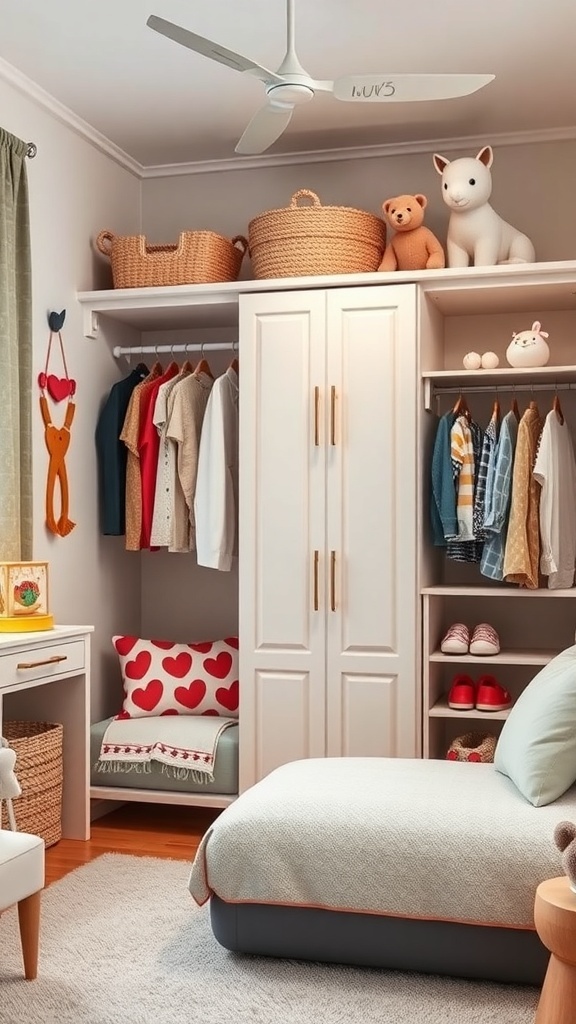
Creating a themed wardrobe area for kids can be a fun and engaging project. The image shows a bright and cheerful space that is both functional and inviting. The wardrobe is neatly organized, making it easy for kids to find their clothes.
Notice the colorful clothes hanging in the wardrobe. This not only adds a splash of color but also encourages kids to take pride in their outfits. Incorporating playful elements, like stuffed animals on the shelves, adds a whimsical touch that makes the space feel friendly and welcoming.
The cozy seating area with a heart-patterned pillow invites kids to sit and choose their outfits comfortably. This can be a great spot for them to explore their style and express their creativity. Using baskets for storage keeps toys and accessories tidy, promoting a sense of order in the room.
Overall, a themed wardrobe area can inspire kids to be organized while allowing their personalities to shine through. It’s all about making the space functional yet fun!
Creating a Visual Outfit Planner
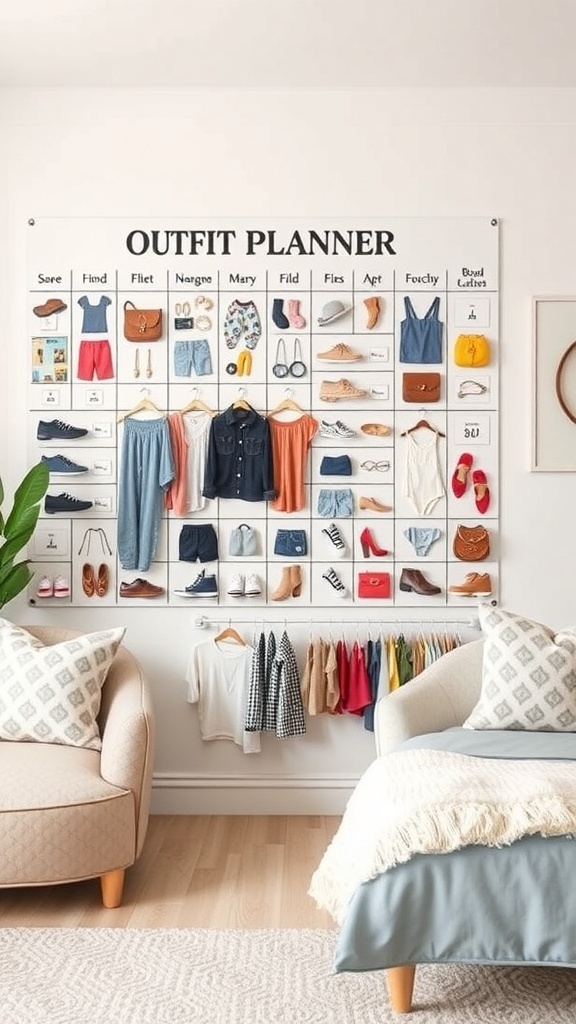
Organizing your kids’ wardrobe can be a fun and creative task. A visual outfit planner is a great way to make this process easier. The image shows a well-organized outfit planner that displays various clothing items in a grid format. This setup allows kids to see their options at a glance, making it simple for them to choose what to wear.
The planner features a mix of tops, bottoms, shoes, and accessories, all neatly arranged. This visual approach helps kids understand how to pair different pieces together. It encourages them to experiment with their style while also making getting dressed a breeze.
Incorporating a visual outfit planner into your child’s room can also promote independence. Kids can pick out their outfits without needing constant help. This not only saves time but also boosts their confidence in making choices.
To create your own outfit planner, consider using a large board or wall space. You can attach pictures of clothing items or even hang the actual pieces. This way, your child can mix and match outfits easily. A fun and organized wardrobe can turn dressing up into an enjoyable daily routine!
Choosing Multi-Purpose Storage Solutions
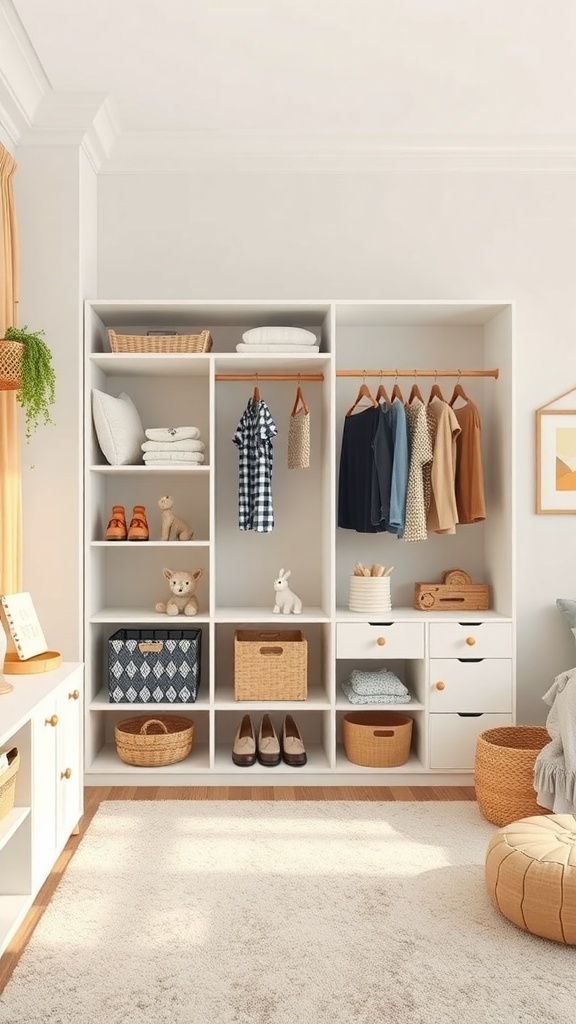
When organizing a kid’s wardrobe, multi-purpose storage solutions can make a big difference. The image shows a neat and tidy wardrobe, showcasing various storage options that keep everything in its place. You can see hanging clothes, neatly folded items, and baskets that hold toys and accessories.
Using shelves and baskets allows for easy access to clothes and toys. The open shelves make it simple for kids to see what they have, which encourages them to keep things organized. Baskets are great for hiding away smaller items, keeping the space looking clean.
Incorporating drawers adds another layer of organization. They can store out-of-season clothes or items that don’t need to be on display. This way, you can maximize space while keeping everything functional.
Choosing storage that fits your child’s needs is key. Look for options that can grow with them, adapting to their changing wardrobe and interests. This approach not only saves money but also helps maintain a tidy space.
Implementing a ‘One In, One Out’ Rule
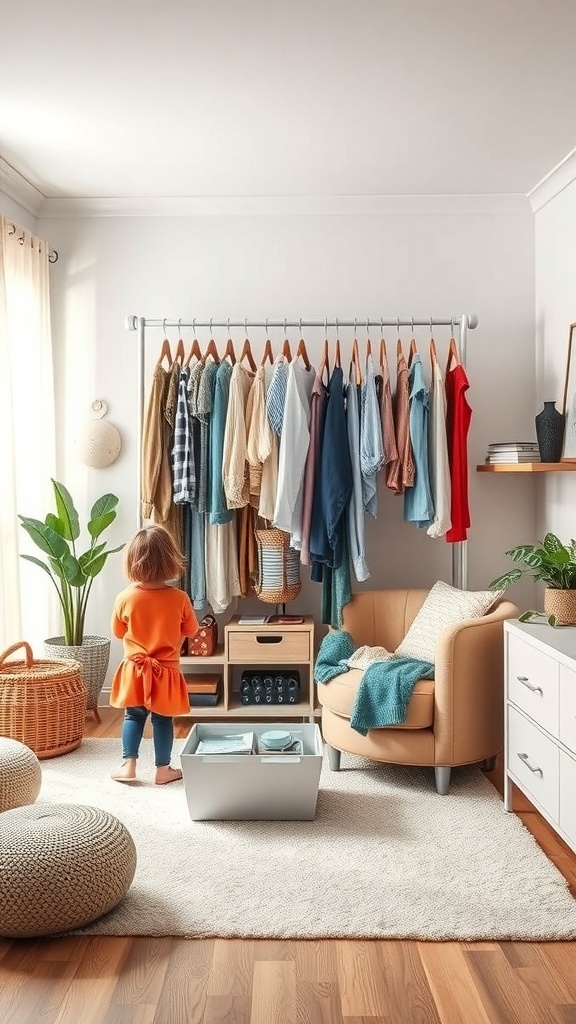
In the image, a child stands in front of a neatly organized wardrobe filled with colorful clothes. This setup is a perfect example of how a well-arranged space can inspire kids to take part in their own wardrobe management. The bright colors and tidy arrangement make it inviting and fun.
Introducing a ‘One In, One Out’ rule can be a game changer for maintaining this organization. This simple guideline means that for every new item of clothing your child receives, one must be removed. This helps keep the wardrobe manageable and prevents clutter from building up.
When kids understand that they need to let go of something to make room for the new, it teaches them valuable lessons about decision-making and responsibility. It’s not just about clothes; it’s about making choices and learning to appreciate what they have.
Encourage your child to pick out an item they no longer wear. This can be a fun activity, allowing them to reflect on their favorites and what they truly need. Plus, it opens the door for discussions about donating or recycling clothes, fostering a sense of generosity.
Using Drawer Dividers for Small Items
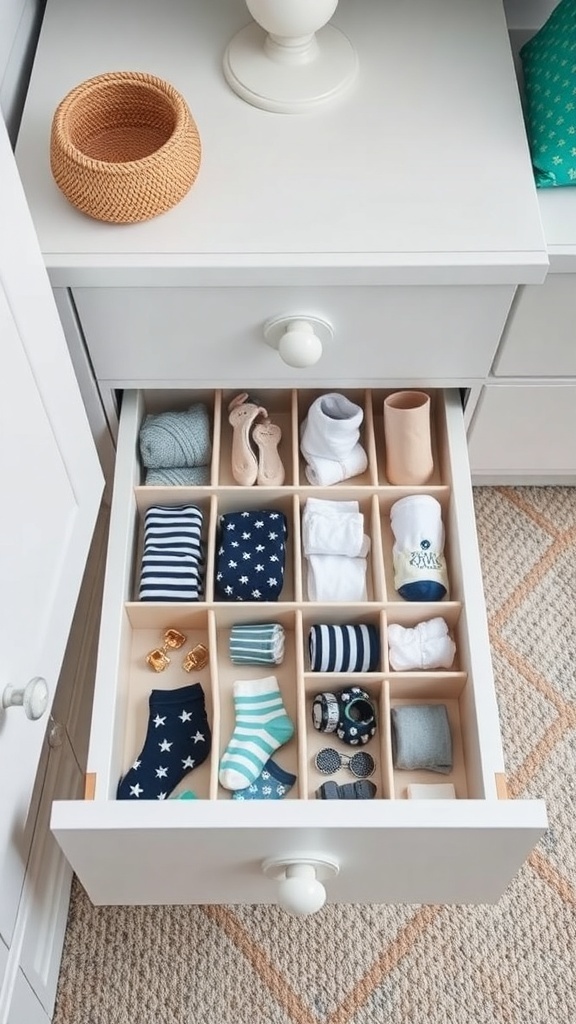
Keeping a kid’s wardrobe organized can be a fun task, especially when you use drawer dividers. The image shows a neatly arranged drawer filled with small items like socks and accessories. Each item has its own space, making it easy to find what you need.
Drawer dividers are perfect for separating different types of clothing. In the picture, you can see how the dividers create sections for socks, tights, and even little accessories. This setup not only looks tidy but also helps kids learn to put things back in their place.
Using dividers can save time during busy mornings. Instead of rummaging through a messy drawer, kids can quickly grab what they need. This approach encourages independence and helps them develop good habits early on.
Another great aspect of using drawer dividers is that they can be adjusted or rearranged as your child’s wardrobe changes. Whether it’s adding more socks or switching to larger sizes, you can easily modify the layout. This flexibility keeps the drawer functional and organized.
Involving Kids in the Organization Process
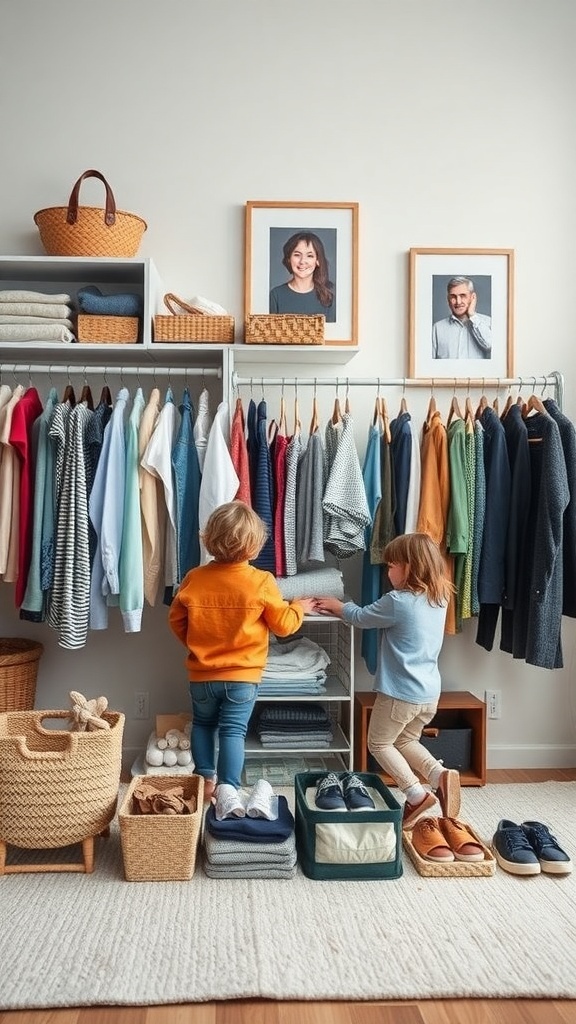
Getting kids involved in organizing their wardrobe can be a fun and rewarding experience. In the image, we see two children actively participating in this process. They are surrounded by neatly arranged clothes and storage baskets, creating a sense of order and excitement.
When kids help organize their clothes, they learn valuable skills. They can choose what to keep, donate, or toss. This teaches them responsibility and decision-making. Plus, it makes them feel proud of their space.
Letting kids pick their outfits from an organized wardrobe can spark their creativity. They can mix and match colors and styles, which boosts their confidence. It’s a great way to express themselves while keeping things tidy.
Make it a game! Set a timer and see how quickly they can sort their clothes. Offer small rewards for their efforts. This turns a chore into a fun activity that they’ll look forward to.
Involving kids in the organization process not only helps keep their wardrobe neat but also builds lasting habits. It’s a win-win for everyone!
Incorporating Hooks and Racks for Accessories
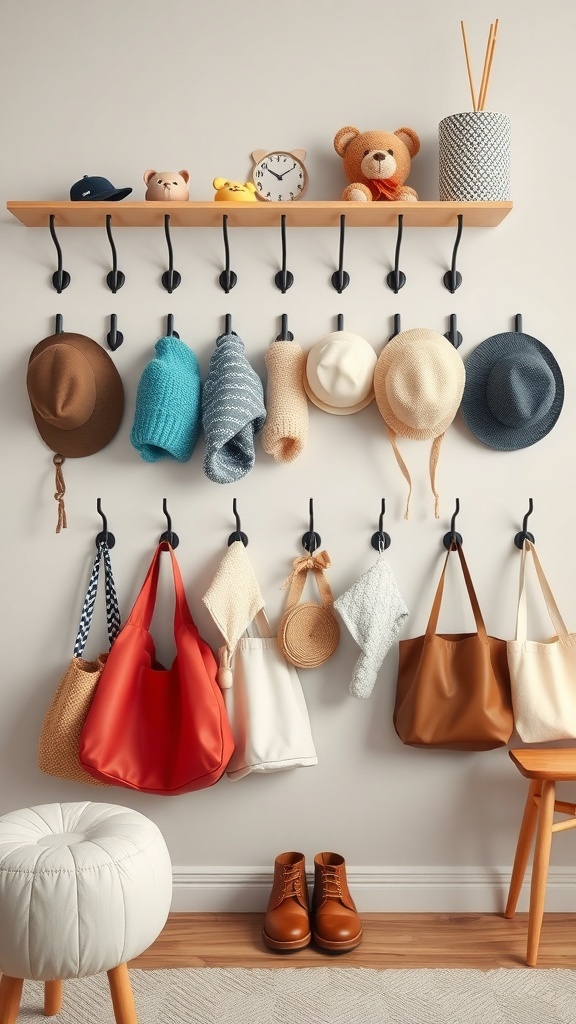
Organizing a kid’s wardrobe can be a fun and creative task. One great way to keep everything tidy is by using hooks and racks for accessories. The image shows a lovely setup with various hooks displaying hats, bags, and even some cozy scarves. This not only keeps items off the floor but also makes it easy for kids to see and grab what they need.
The shelf above adds a nice touch, holding cute toys and a clock, making the space feel welcoming. It’s a smart way to use vertical space, which is often overlooked in kids’ rooms. By hanging items up, you can create a playful environment while teaching kids to take care of their belongings.
Using colorful hooks can make the organization process more engaging for children. They can choose their favorite colors or themes, which encourages them to participate in keeping their space neat. Plus, it’s a great way to display their favorite accessories, turning the wardrobe into a mini gallery of their style.
Choosing Kid-Friendly Fabrics for Easy Care
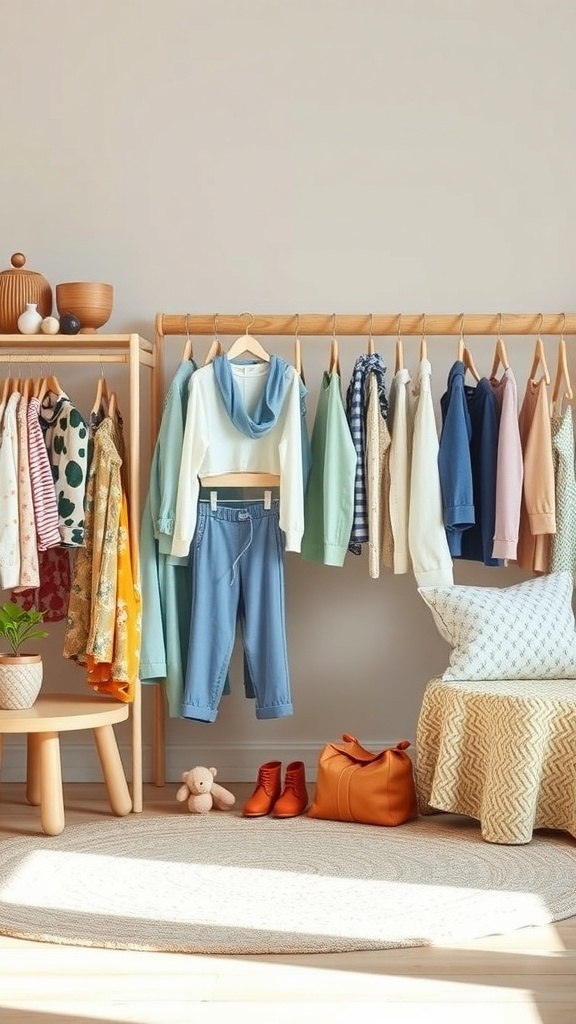
When organizing a kid’s wardrobe, fabric choice matters. The image shows a neat setup with colorful clothes hanging on a wooden rack. This setup is not just visually appealing but also practical.
Opting for fabrics like cotton and polyester blends is smart. These materials are soft, durable, and easy to clean. Kids can be messy, so having clothes that withstand spills and stains is a plus.
The hanging clothes in the image reflect a variety of styles and colors. This variety keeps things fun and allows kids to express themselves. Plus, easy-care fabrics mean less time spent on laundry and more time for play!
Don’t forget about comfort. Look for stretchy materials that allow for movement. The blue pants in the image are a great example. They look comfy and perfect for a day of activities.
Creating a Reward System for Keeping Organized
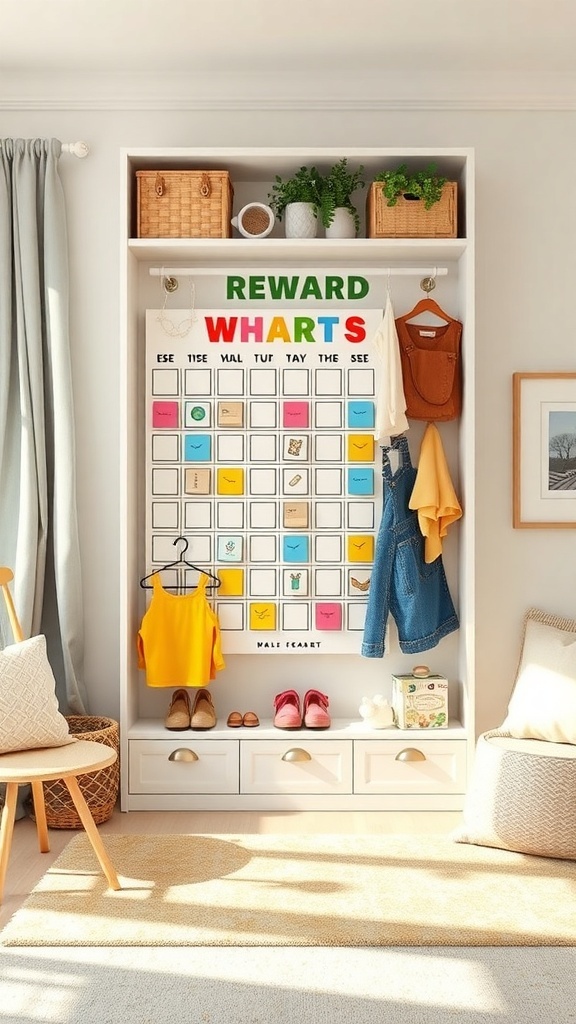
Setting up a reward system can make keeping a kids’ wardrobe organized fun and engaging. The image shows a colorful chart labeled ‘REWARD WHARTS’ that can motivate children to participate in tidying up their space. This chart is a visual reminder of their progress and achievements.
Each box on the chart can represent a task, like hanging up clothes or putting shoes away. When kids complete these tasks, they can mark off a box. This not only helps them stay organized but also gives them a sense of accomplishment.
Incorporating fun rewards, such as stickers or small treats, can further encourage kids to keep their wardrobe neat. The bright colors and playful design of the chart make it appealing and easy to understand for young ones.
Creating a routine around this system can help kids develop good habits. Over time, they will learn the importance of organization and take pride in their tidy space.
Establishing a Regular Wardrobe Review Schedule
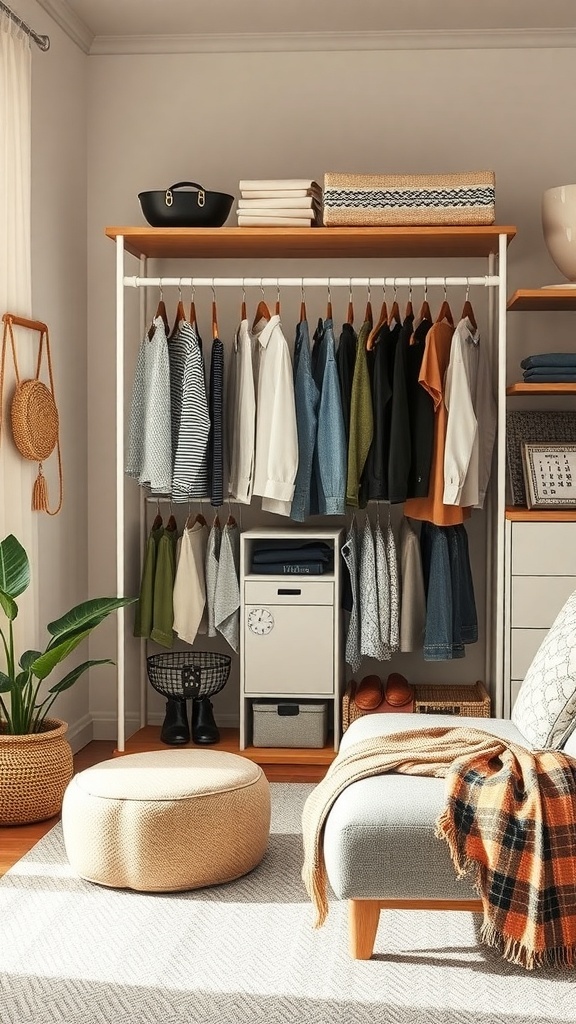
Keeping a tidy kids’ wardrobe can feel like a challenge, but a regular review schedule makes it easier. The image shows a well-organized closet, showcasing neatly hung clothes and a cozy seating area. This setup not only looks great but also encourages kids to take part in keeping their space tidy.
Start by setting a specific day each month to go through the wardrobe. Gather your little ones and make it a fun activity. Check for clothes that no longer fit or are out of season. This is a great way to teach kids about organization and responsibility.
As you sort through the clothes, involve your kids in deciding what to keep, donate, or recycle. This helps them feel empowered and teaches them the value of giving. Plus, it’s a chance to rediscover hidden gems in their wardrobe!
After sorting, take a moment to reorganize the remaining items. Use bins or baskets for smaller items like accessories or shoes. A well-structured wardrobe, like the one in the image, makes it easy for kids to find what they need quickly.
Lastly, don’t forget to celebrate the newly organized space! A little reward or treat can make the process enjoyable and motivate them to keep their wardrobe in check.